Where Data Center Construction Is Headed Next, The Top Markets to Watch for 2027
Table of contents
For years, developers concentrated data centers around a handful of established hubs like Northern Virginia, Phoenix, and Dallas. That pattern is breaking. JLL reports that 77 percent of North America's data center capacity currently under development is now in frontier markets, places without a legacy data center presence.
Pew Research found that 67 percent of planned U.S. data centers are in rural areas, and 39 percent are going into counties with no existing data center at all. Power availability, land, permitting speed, and community sentiment are now driving site selection more than proximity to existing infrastructure. Here is where that shift is pointing for the data center construction markets 2027 will be built in.
The New Site Selection Formula, Power and Permission
77%
of North America's data center capacity under development is now in frontier markets
For most of the cloud era, developers thought in terms of fiber, customers, land, taxes, and power, in roughly that order. AI has flipped that order.
CBRE now says securing 300 or more megawatts of power within about 36 months has overtaken connectivity as the dominant site selection factor, and large AI campuses can require 24 to 48 months or more just to develop enough power.
- Power availability, can the site actually deliver 300 megawatts, 500 megawatts, or a full gigawatt
- Political certainty, will local approval hold up once community opposition begins
- Transmission, are lines and substations already in place
- Generation, can the utility build enough power, or will the campus generate its own
- Land, large campuses increasingly need hundreds or thousands of acres
- Water, especially critical in Arizona, Nevada, Utah, and New Mexico
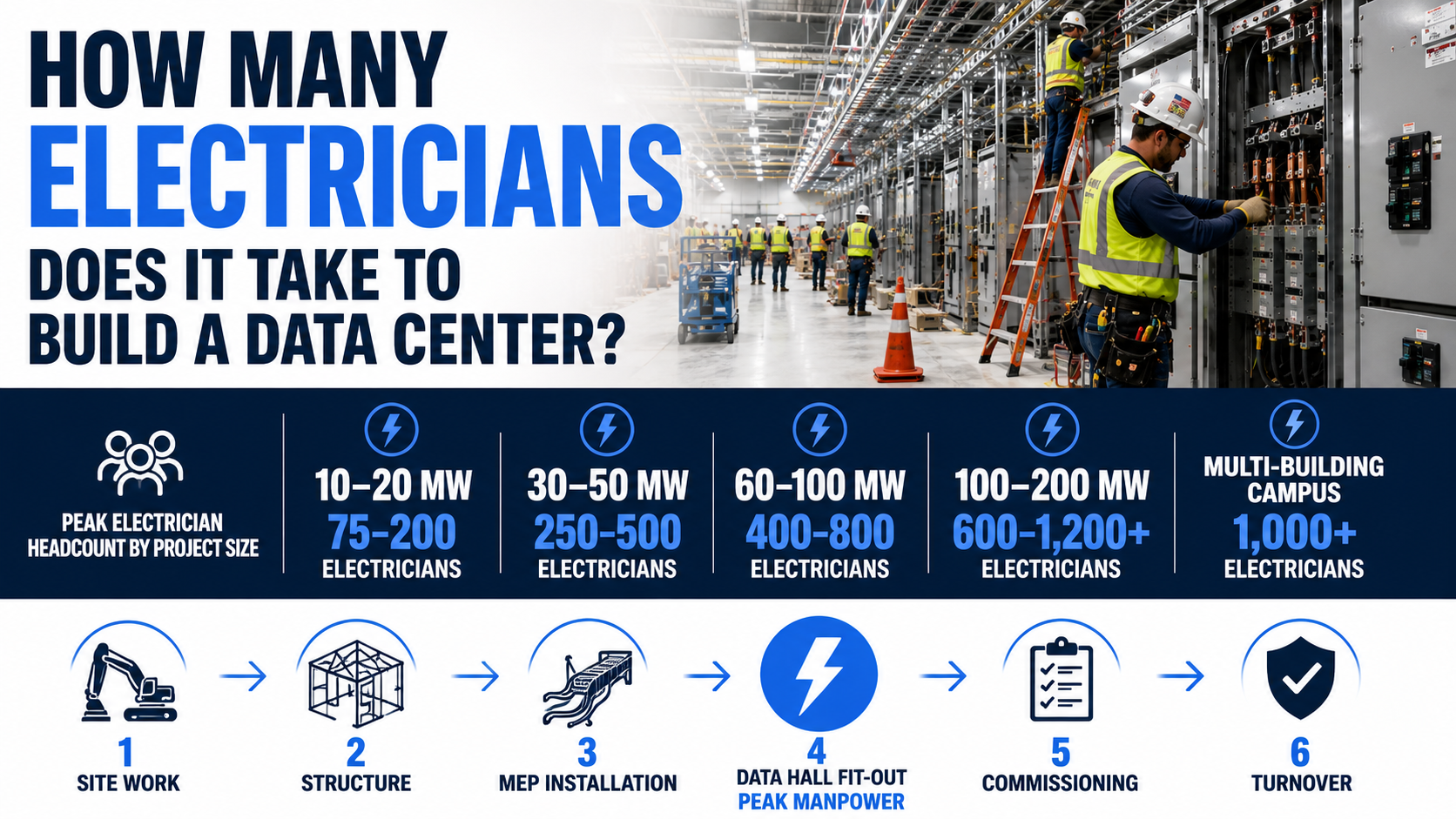
- Skilled workforce, can contractors actually staff 500 to 2,000 electricians at peak
- Fiber and latency, still important, but less dominant than it once was
1. Dallas Fort Worth, Texas
- Cushman and Wakefield ranks Dallas the number one primary data center market in the world for 2026
- 25 facilities currently under construction, with live capacity around 1.84 gigawatts
- Texas is being described as the next Virginia, backed by land, natural gas infrastructure, and an independent grid
Texas is not the free for all it once was. In June 2026, regulators approved a new process called Batch Zero, which evaluates large proposed loads of 75 megawatts or more together so the grid operator can determine what it can actually support. The 2027 story here is less about unlimited opportunity and more about powered sites becoming far more valuable than speculative land. 2027 outlook: 10 out of 10.
2. Atlanta and Greater Georgia
- CBRE reports Atlanta has overtaken Northern Virginia as North America's most active construction market, with about 2.9 gigawatts under construction
- Georgia has 141 planned data centers, third most in the country
- New large load electricity agreements are expected to save customers roughly 950 million dollars annually starting in 2029
Regulation and local pushback are both increasing here. A statewide moratorium bill has been introduced but has not advanced, and at least one county has already enacted a temporary permitting pause. Expect development to keep expanding, but increasingly in outer counties and other Georgia Power territory rather than the metro core. 2027 outlook: 9.8 out of 10.
3. Columbus and Central Ohio
- Cushman and Wakefield ranks Columbus fourth among primary markets globally
- Ohio has an estimated 10 gigawatts of announced or under construction pipeline
- Amazon, Google, Meta, and Microsoft all have a major presence in the region
The regional utility paused new large data center agreements until it could protect the grid, then introduced a tariff requiring customers to pay for at least 85 percent of their contracted capacity even if they use less, with commitments extending up to 12 years. Developers accepted the terms anyway, signing contracts for more than 5,600 additional megawatts under the new rules. Serious developers will take tougher terms in exchange for certainty that power actually arrives. 2027 outlook: 9.6 out of 10.
4. West Texas, Abilene to Pecos
- Ranked the number one tertiary data center market in the Americas by Cushman and Wakefield
- Microsoft's Pecos campus alone is expected to bring more than 6,000 construction jobs at peak
- Developers are increasingly exploring onsite power generation instead of relying solely on grid interconnection
West Texas offers land, natural gas, solar, wind, and room for large scale generation that older markets simply do not have. One developer is even pursuing a campus with its own islanded power system rather than waiting on grid connection. Expect this region to become one of the largest electrical construction labor markets in the country, covering generation and substations as much as the data centers themselves. 2027 outlook: 9.6 out of 10.
5. Austin to San Antonio Corridor
- Ranked the number one secondary data center market in the Americas
- Stretches from Austin through Taylor and Bastrop to San Antonio
- Combines semiconductor manufacturing, data centers, and advanced manufacturing in one labor market
This corridor pulls from the same skilled workforce as major chip fabrication projects, meaning 2027 construction capacity here may be constrained by available labor as much as by demand. The projects most likely to actually get built will be the ones with a credible power delivery plan already in place, not just acreage. 2027 outlook: 9.4 out of 10.
6. Richland Parish and Monroe, Louisiana
- Meta's Hyperion project is expected to reach 5 gigawatts of capacity, with investment exceeding 50 billion dollars
- More than 7,500 construction workers expected at peak
- The associated power plan includes seven new natural gas plants, three battery installations, and nuclear uprates
Once power infrastructure is committed at this scale, it tends to attract additional development around it. Louisiana's state government is aggressively courting these projects, though New Orleans itself has enacted a one year moratorium while it writes new rules, a reminder that site selection is becoming hyper local even within a single state. 2027 outlook: 9.1 out of 10.
7. Northern Virginia
- Still the largest data center market in the world, with inventory around 4,496 megawatts and vacancy near zero
- Loudoun County has moved away from automatic approval, now requiring special exception review for many new projects
- Prince William County is similarly shrinking its automatic approval zone
Northern Virginia remains enormous, but it is becoming a case study in what happens when a market gets too successful. Future projects face a higher approval hurdle, and developers are increasingly comparing Virginia against markets where land and power are easier to secure. 2027 outlook: 8.9 out of 10.
8. Indianapolis and Lebanon, Indiana
- Meta's Lebanon campus represents more than 10 billion dollars in investment and roughly 4,000 construction jobs at peak
- Construction began in February 2026 with major activity extending through 2027
- Indiana had 54 planned data centers against just 38 currently operating, an unusually strong pipeline
Google and other developers are also active in the region. Lower land costs, Midwest grid access, and strong logistics infrastructure make Central Indiana a market to watch closely heading into 2027. 2027 outlook: 8.7 out of 10.
9. Phoenix and the West Valley
- Remains one of the largest primary markets in the country
- Arizona has frozen new data center tax incentive applications from mid 2026 through mid 2029
- Federal cuts to Colorado River water allocations begin affecting Arizona in 2027 and 2028
Expect continued growth, but with more emphasis on air cooled designs, reclaimed water, and western metro locations outside the densest urban core. Buckeye, a large and mostly undeveloped city in the West Valley, is worth watching closely for future rather than current construction. 2027 outlook: 8.4 out of 10.
10. Hickory and Catawba County, North Carolina
- The Carolinas rank second among secondary markets in the Americas
- Microsoft has plans for four data centers in Catawba County, with at least 1 billion dollars in investment
- Charlotte enacted a 150 day moratorium on new data center applications in June 2026
Demand is not disappearing from North Carolina, it is simply moving 40 to 70 miles outside Charlotte to areas with cheaper land and less regulatory friction. This pattern, growth pushed to the outskirts of a major metro, is becoming common across the country. 2027 outlook: 8.2 out of 10.
Markets That Look Bigger Than They Are
Not every established market deserves a top ranking for new 2027 construction. Phoenix and Northern Virginia remain huge, but incentives, water, and permitting friction make new greenfield projects harder there than the historical numbers suggest.
New York has only six planned data centers against 148 already operating, and has moved further toward restriction than most major markets, making it an unlikely source of upcoming data center construction.
Why Rural America Is Becoming Data Center Country
Pew Research found that 67 percent of planned data centers are in rural areas, compared with only 13 percent of existing facilities. Thirty nine percent of planned projects are going into counties with zero current data centers.
Places like Abilene, Pecos, Richland Parish, Lebanon, and Catawba County are not replacing Dallas or Ashburn, they are absorbing the next generation of campuses that have simply become too large for traditional markets to hold. For anyone tracking the best states for data center jobs, that is where the work is moving.
The 2027 Market Ranking at a Glance
| Rank | Market | 2027 Outlook | Biggest Advantage | Biggest Risk |
|---|---|---|---|---|
| 1 | Dallas Fort Worth | 10 out of 10 | Scale and Texas energy ecosystem | Grid connection constraints |
| 2 | Atlanta and Greater Georgia | 9.8 out of 10 | Massive active pipeline | Political and local opposition |
| 3 | Columbus and Central Ohio | 9.6 out of 10 | Hyperscale cluster with utility certainty | Strict large load tariff |
| 4 | West Texas | 9.6 out of 10 | Energy and enormous land | Transmission buildout |
| 5 | Austin to San Antonio | 9.4 out of 10 | Tech and manufacturing corridor | Power and labor competition |
| 6 | Richland Parish and Monroe | 9.1 out of 10 | Massive committed generation | Concentration around one project |
| 7 | Northern Virginia | 8.9 out of 10 | World's deepest ecosystem | Permitting and power constraints |
| 8 | Indianapolis and Lebanon | 8.7 out of 10 | Emerging hyperscale cluster | Grid buildout needed |
| 9 | Phoenix and West Valley | 8.4 out of 10 | Land and established market | Water and lost incentives |
| 10 | Hickory and Catawba County | 8.2 out of 10 | Carolinas growth with lower cost land | Increasing local scrutiny |
What This Means for Electricians and Contractors
The next boom will not be won by the places with the most buildings already standing. It will be won by the places that can deliver power, land, and political certainty at the same time. That is pushing construction away from crowded legacy hubs toward the outskirts of major metros, secondary cities, and previously rural counties.
For electrical contractors and skilled trades, this points toward an increasingly decentralized AI data center construction boom, one where the next large scale project could break ground hundreds of miles from today's traditional hubs.
Data center electrician jobs are opening in every market on this list, from journeyman positions to commissioning technicians.
Apply to work on projects like theseConclusion
Northern Virginia, Phoenix, and Atlanta will remain enormous. But West Texas, Louisiana, Central Ohio, Indiana, and the Carolinas show where the next wave of AI infrastructure is actually heading. The markets that win in 2027 will be the ones that solve power and permission first.
Finish Line mobilizes vetted electricians and craft crews into every one of these markets, from a single journeyman to a full crew.
Get workforce solutions for your next project